
As a long-term OCL user, I find that manually accounting for grooving and edge banding remains a significant bottleneck prone to human error.
While OCL is a powerhouse with immense potential, there is a critical need for it to generate a "self-explanatory" cutlist document. For a seamless workflow with the cutting factory, the software must prioritize (on top of the already available edge banding):
Native Grooving: The ability to model and track grooves directly within the extension.
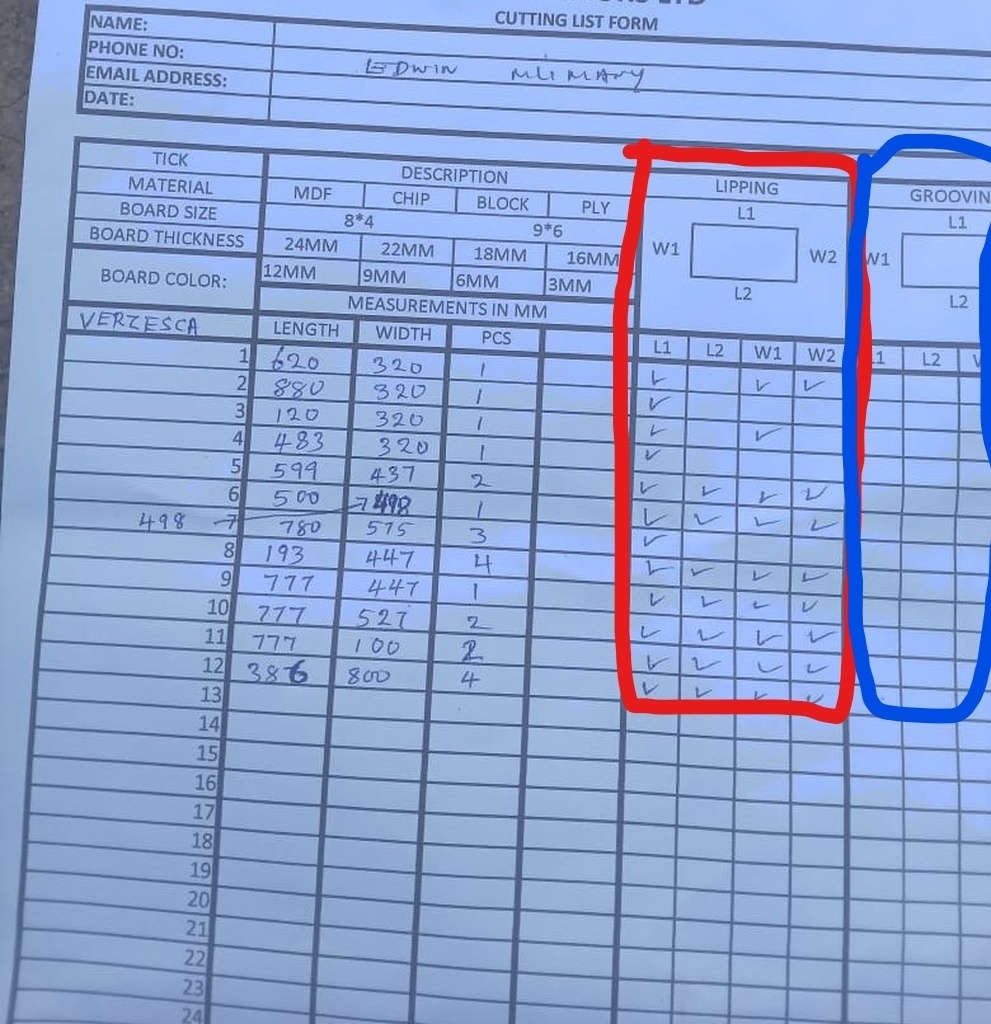
Consolidated Reporting: Automatically pulling grooving and edge banding details into a unified table (as shown in the attachment).
This functionality is already a core capability in similar software like SketchCut, and bringing OCL up to this standard would be a logical evolution.
The goal is a definitive reference document that clearly communicates every part’s processing requirements to the factory, eliminating the guesswork and manual entry that currently slow down production.
1 réponse

Bonjour Yuhan,
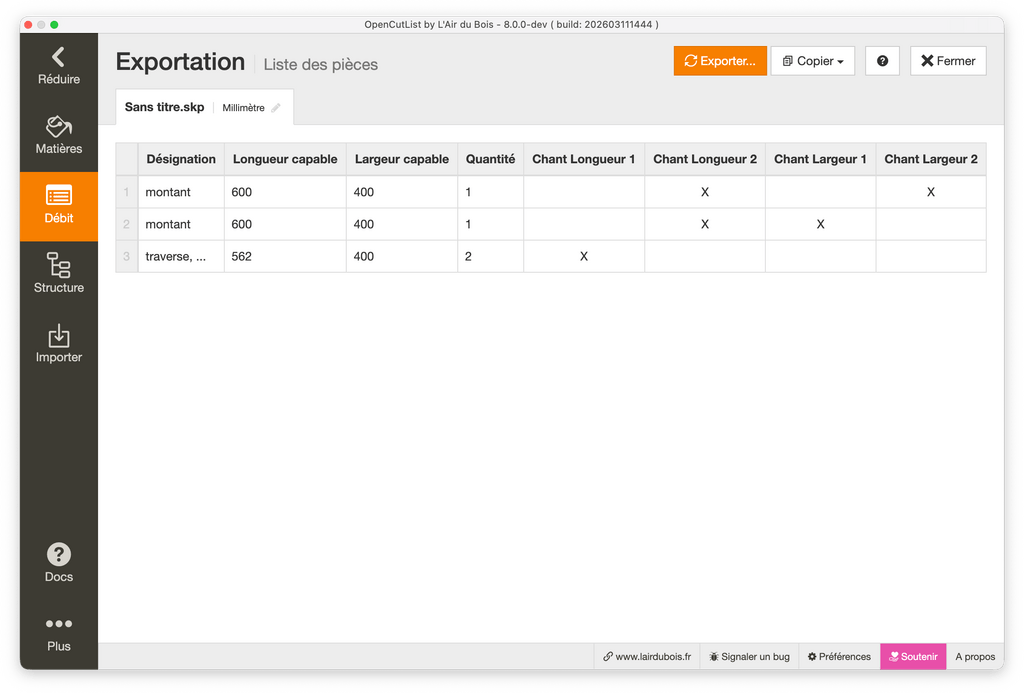
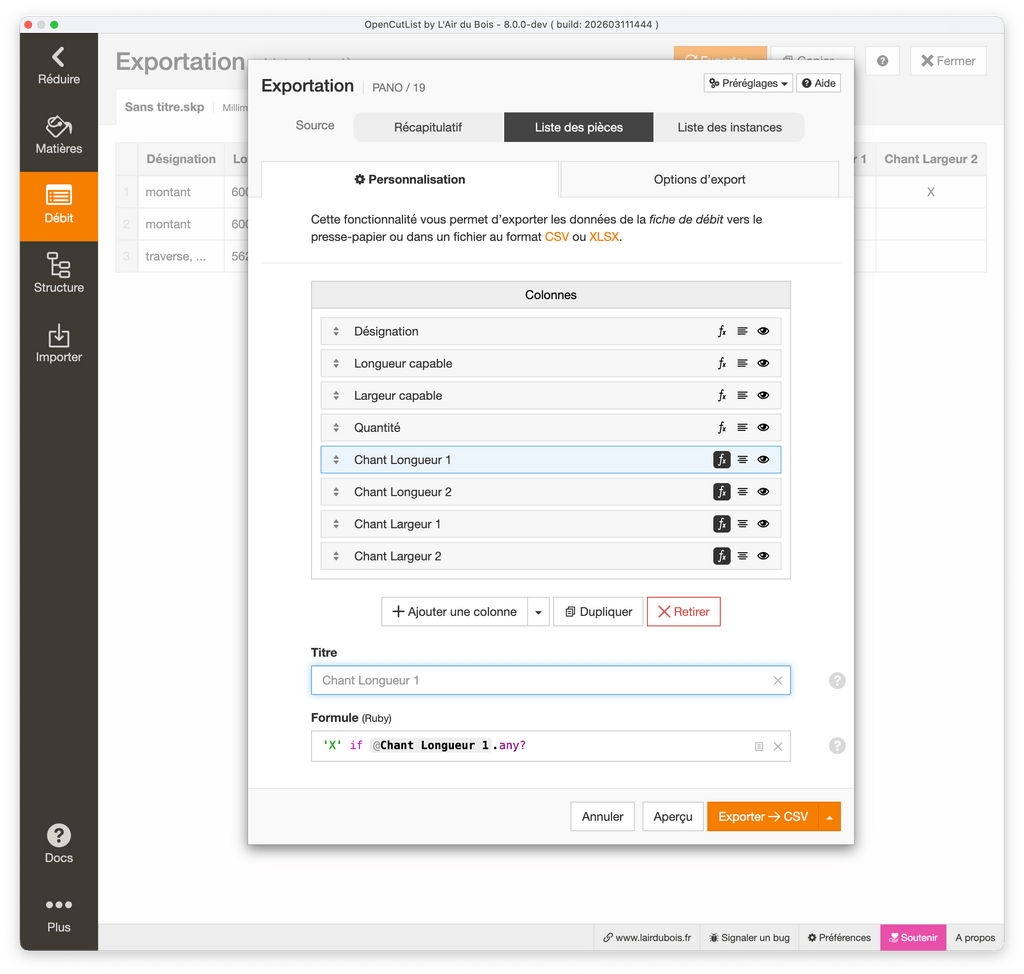
Actuellement il est déjà possible d'exporter la fiche de débit avec la liste des chants plaqués.
Pour les rainures, la difficulté serait de les détecter.
Comment différencier une rainure d'une feuillure ou d'un simple trou rectangulaire dans la pièce.
Par ailleurs, les pièces peuvent avoir des formes non rectangulaires, donc dans ce cas, dans quelle colonne attribuer les usinage ?
Licence
